
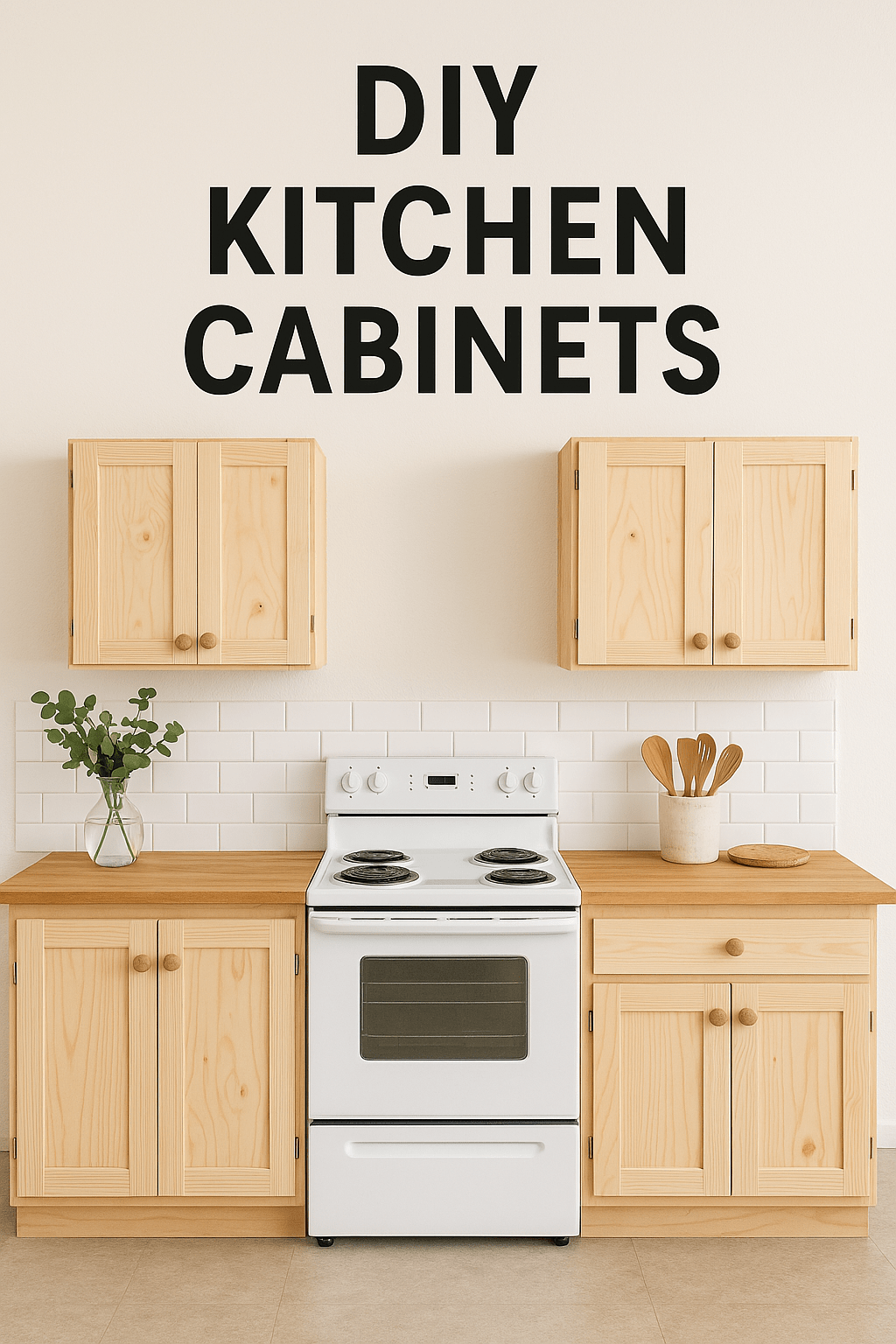
Looking to refresh your kitchen without a full renovation?
Building your own kitchen cabinets might sound intimidating, but with a few tools, patience, and this simple guide, you can create beautiful, functional cabinets that suit your space and style on a budget.
Why DIY Kitchen Cabinets?
- Cost-effective: Custom cabinets can be expensive. DIY helps you save while still getting a custom look.
- Tailored to your space: Whether you have a tiny apartment or a spacious kitchen, DIY lets you create cabinets that fit perfectly.
- Creative freedom: Choose the design, finish, handles, and wood type that align with your style.
🧰What You’ll Need:
Materials:
- Plywood or MDF (¾ inch thick)
- Wood glue
- Screws
- Hinges
- Handles or knobs
- Paint or wood stain
Tools:
- Circular saw or table saw
- Drill
- Measuring tape
- Sandpaper or power sander
- Clamps
- Level
🪚 Step-by-Step Instructions:
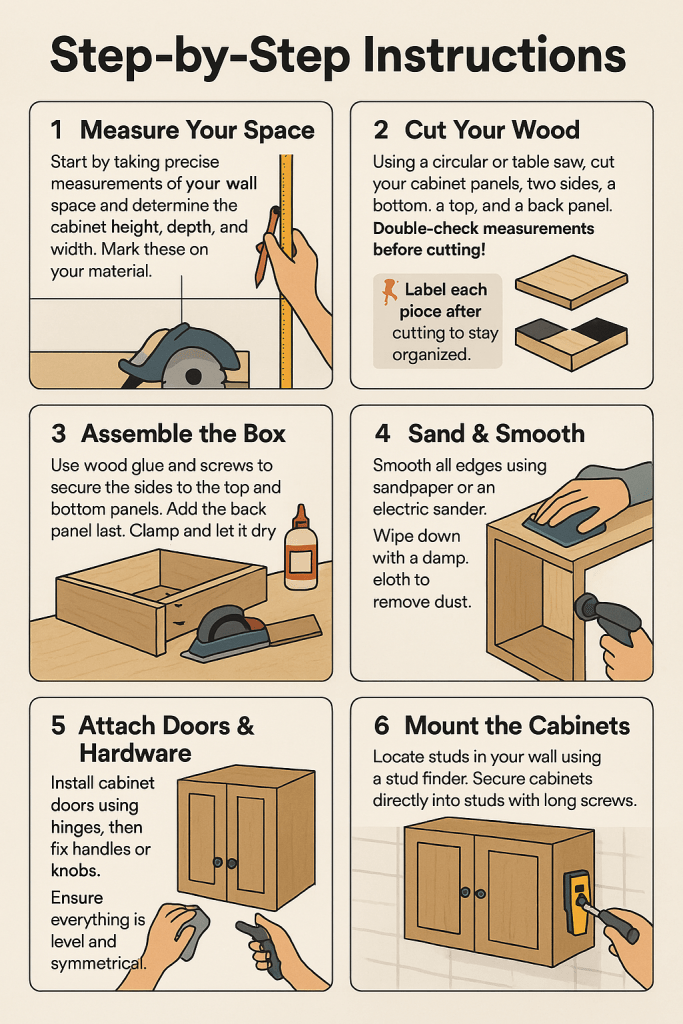
1. Measure Your Space
Start by taking precise measurements of your wall space and determine the cabinet height, depth, and width. Mark these on your material.
2. Cut Your Wood
Using a circular or table saw, cut your cabinet panels: two sides, a bottom, a top, and a back panel. Double-check measurements before cutting!
📌 Tip: Label each piece after cutting to stay organized.
3. Assemble the Box
Use wood glue and screws to secure the sides to the top and bottom panels. Add the back panel last. Clamp and let it dry.
4. Sand & Smooth
Smooth all edges using sandpaper or an electric sander. Wipe down with a damp cloth to remove dust.
5. Attach Doors & Hardware
Install cabinet doors using hinges, then fix handles or knobs. Ensure everything is level and symmetrical.
6. Mount the Cabinets
Locate studs in your wall using a stud finder. Secure cabinets directly into studs with long screws.
🛡️ Safety Tips:
- Always wear protective gear when cutting or sanding wood.
- Keep fingers away from saw blades and drill bits.
- Work in a well-ventilated area.
⚠️ Common Mistakes to Avoid:
Forgetting to seal or paint – untreated wood is prone to damage over time.
Skipping measurements – always measure twice, cut once.
Using the wrong screws – cabinet screws are stronger and more stable.
Tips for Success:
- Always double-check measurements before cutting.
- Use a level during assembly to keep things aligned.
- Choose moisture-resistant wood or finish for long-term durability.
- Pre-drill holes to avoid splitting wood.
Final Thoughts
DIY kitchen cabinets are a rewarding way to add value and style to your home. It’s not just about saving money—it’s about crafting something meaningful with your own hands.
Whether you’re going for a modern, rustic, or minimalist look, you can make it happen with some time, effort, and creativity.
Want More?
Follow Forte Aesthetics for interior tips, smart woodwork ideas, and project inspiration delivered straight to your inbox.
 Forte Aesthetics Products & Services
Leave a comment